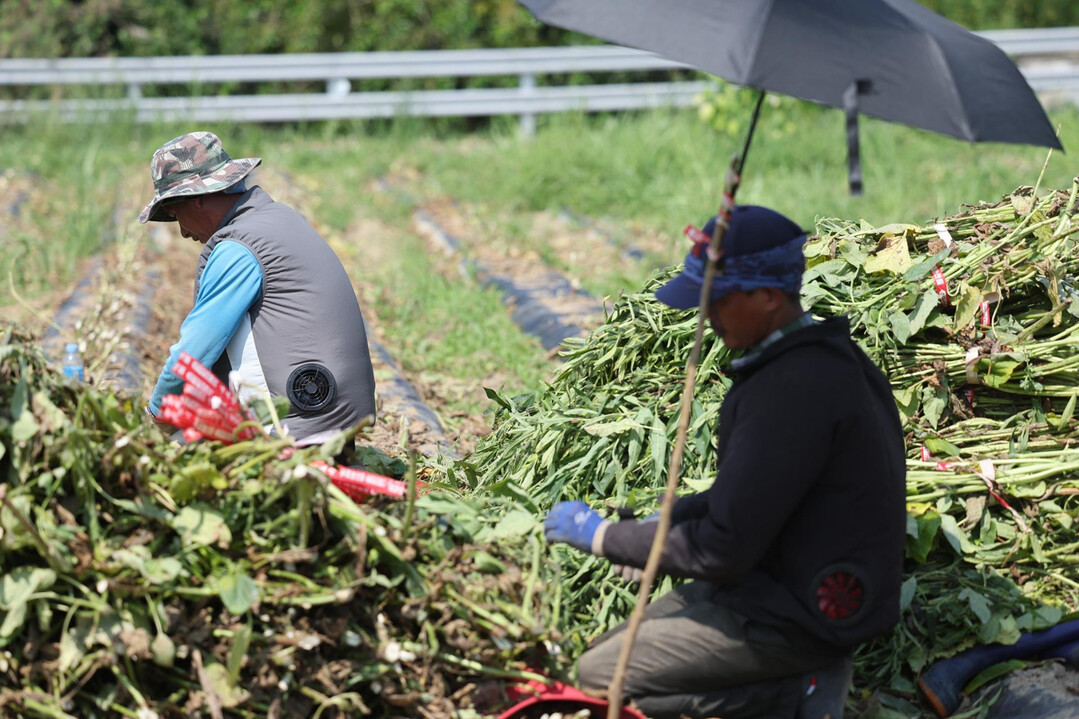
SEOUL, South Korea — Intensifying climate extremes, characterized by back-to-back heatwaves and torrential rains, are taking a heavy toll on South Korea’s agricultural sector. As erratic weather increasingly threatens crop yields and threatens food supply stability, experts and policymakers are pointing to digital farming and artificial intelligence (AI) as essential tools for survival.
According to data released by the Ministry of Agriculture, Food and Rural Affairs on the 23rd, payouts from the state-backed crop disaster insurance program reached 1.3357 trillion won last year—a sharp 30.8% jump from the 1.0208 trillion won recorded in 2024. The number of farming households receiving compensation also climbed 9.2%, rising from 243,274 to 265,715. Currently, the insurance program covers 78 agricultural products, including apples, pears, napa cabbage, and green onions, to cushion farmers against natural disasters.
Shifting Patterns of Agricultural Damage
Analysts attribute the surge in insurance claims to the growing frequency of abnormal weather events, particularly severe heat and heavy downpours. Figures from the Korea Insurance Development Institute show that heavy rain accounted for 24.3% of crop insurance claims in 2024 and 29.2% in 2023, up dramatically from just 8.2% in 2022. Over the same two-year period, claims linked to heatwaves and droughts rose from 8.2% to 10.2%.
The compounding effects of heat and moisture have also triggered widespread crop diseases. Last summer, unusually high temperatures combined with prolonged autumn rains in September and October fueled an outbreak of rice brown spot disease. The fungal infection, which thrives in hot and humid conditions, damaged 46,084 hectares of rice paddies across 111 municipalities nationwide.
More recently, the agriculture ministry officially designated heavy rain damage to spinach crops in South Gyeongsang Province’s Goseong and Namhae counties as an agricultural disaster. Frequent rainfall and the aftermath of Typhoon Champi last month caused severe moisture damage, leading to wilting and root rot across 760 hectares—more than half of the region's total 1,450-hectare spinach cultivation area.
"Climate change is impacting agriculture through a chain of overlapping, seasonal disasters," the Korea Rural Economic Institute noted in a recent assessment. "With intensifying rainfall and prolonged heatwaves and tropical nights, farmers are facing cumulative compound disasters that combine short-term extreme downpours with long-term heat stress."
Policy Shifts and the Push for Smart Farming
In response to the escalating scale of climate-related losses, the South Korean government has moved to expand its safety net for farmers. Revisions to the Act on Countermeasures Against Agricultural and Fishery Disasters, which took effect in August, officially added earthquakes and abnormal heatwaves to the legal definition of agricultural disasters, making pest and disease outbreaks directly caused by extreme heat eligible for state aid. A concurrent revision to the Agricultural and Fishery Disaster Insurance Act also exempts farmers from insurance premium surcharges when hit by catastrophic disasters ranking in the top 10% of historical damage scales.
However, industry observers emphasize that financial compensation alone is not enough, calling for a fundamental structural shift in how food is grown. Echoing this sentiment, the United Nations Food and Agriculture Organization (FAO) highlighted in its digital agriculture and AI innovation roadmap last December that leveraging digital technologies is vital not just for boosting productivity, but for strengthening resilience, equity, and climate security.
To future-proof its agricultural sector, South Korea’s agriculture ministry is accelerating the adoption of smart farming and AI technologies. Under its current roadmap, the government aims to convert 35% of the nation's roughly 55,000 hectares of greenhouses into smart farms by 2029. Additionally, it plans to deploy at least one smart farming technology across 20% of major dry-field crop production areas undergoing mechanization, while building an AI-powered disaster response system to better predict and mitigate climate risks.
[Copyright (c) Global Economic Times. All Rights Reserved.]