SEOUL — South Korea’s corporate sector is rapidly advancing its approach to nature-related financial disclosures, shifting focus from merely mapping operational footprints to assessing concrete financial risks and management strategies.
During the annual meeting of the Nature-Related Disclosure Support Alliance held at the Korea Chamber of Commerce and Industry (KCCI) in Seoul on November 27, over 80 industry leaders, researchers, and policymakers packed the venue—forcing organizers to bring in extra seating—to discuss how businesses can translate ecological data into actionable corporate governance.
According to data shared by the National Institute of Biological Resources (NIBR), 34 South Korean companies have published reports aligned with the Taskforce on Nature-related Financial Disclosures (TNFD) recommendations this year, ranking the country ninth globally. Membership in the domestic support alliance has also surged from 63 organizations last year to 104 as of the meeting date.
Advancing Beyond Basic Ecological Mapping
Supported by a joint consortium of Kim & Chang and Seoul National University’s Graduate School of Environmental Studies under an NIBR research initiative, telecom giant SK Telecom and tobacco-and-ginseng manufacturer KT&G presented pilot reports demonstrating the latter stages of the TNFD’s "LEAP" framework (Locate, Evaluate, Assess, Prepare).
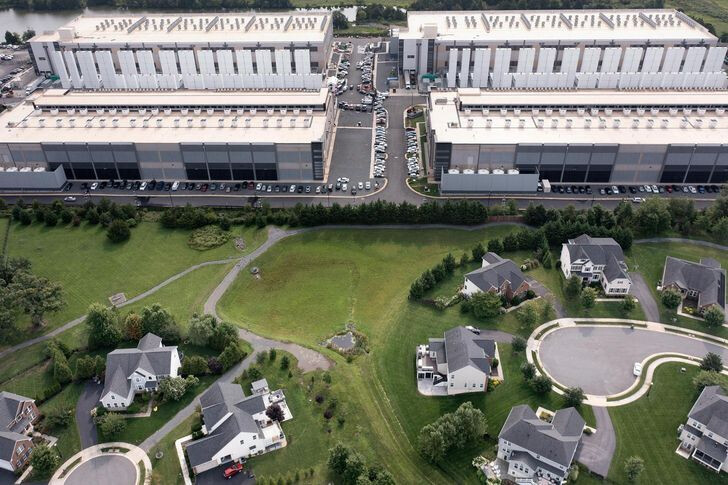
SK Telecom overlaid its wired and wireless infrastructure—including subsidiary SK Broadband’s data centers—onto environmental hazard maps. Going beyond basic geographic overlap with flood zones, the company analyzed projected flood depths alongside facility layouts and drainage capacities at four key data centers to prioritize protection for critical power and cooling systems. Furthermore, scenario modeling for new data center developments revealed that land-use conflicts and local community opposition pose significant permitting delay risks across all regulatory environments.
KT&G expanded its assessment beyond manufacturing plants to encompass its subsidiaries and directly contracted tobacco and ginseng farms. To evaluate water stress accurately, the company cross-referenced regional drought data with actual water intake volumes and specific watershed sources at each facility, while also tracking discharge routes near potential habitats of threatened species.
Standardizing Restoration Metrics and Spatial Data
Discussions at the forum also highlighted technical hurdles in reporting biodiversity restoration and spatial risks. Addressing questions regarding restoration projects—such as SK Telecom’s wildfire-damaged forest in Andong and KT&G’s Janggu-megi Wetland—researchers noted that the current focus is on establishing standardized methodologies rather than publishing raw offset figures, warning against the misuse of restoration credits to mask ecological damage elsewhere.
Under revised TNFD guidelines, companies are discouraged from netting out deforestation in one region with reforestation in another; instead, losses and gains must be disclosed separately. Experts also advised moving away from arbitrary 5-to-10-kilometer buffer zones around factories in favor of watershed- or ecosystem-specific boundaries.
Meanwhile, addressing concerns raised by Samsung Electronics regarding data asymmetry—where high-resolution domestic ecological maps make local facilities appear riskier than overseas sites with sparser data—NIBR proposed a tiered screening approach using global datasets first, followed by localized deep dives. To support businesses, the National Institute of Ecology announced plans to launch a spatial analysis platform by late 2028, which will provide grid-level data to protect endangered species from poaching while informing corporate risk assessments.
Aligning With Investor Expectations and ISSB Standards
The conference also examined the International Sustainability Standards Board (ISSB) exposure draft on nature-related disclosures, released on October 22. Unlike the TNFD, which also weighs a company's direct impact on nature, the ISSB framework zeroes in on how nature-related dependencies and risks alter a firm’s financial outlook—such as supply chain vulnerabilities caused by pollinator decline or concentrated production disruptions in water-scarce regions.
While South Korea’s adoption timeline for the ISSB-aligned standards remains undecided, the Korea Sustainability Standards Board (KSSB) noted strong corporate apprehension regarding potential mandatory compliance. Both boards are currently collecting stakeholder feedback ahead of deadlines in early 2027.
Looking ahead, the NIBR plans to publish a comprehensive guide covering 18 TNFD sector standards next year, while alliance members proposed inviting global institutional investors to future sessions to pinpoint which ecological metrics truly drive investment decisions.
[Copyright (c) Global Economic Times. All Rights Reserved.]