• 2026.11.13 (Fri)
  • All articles
  • LOGIN
  • JOIN
Global Economic Times
[등록] 2026-09-01 15:48:31
  • Synthesis
  • World
  • Business
  • Industry
  • ICT
  • Distribution Economy
  • Well+Being
    • Pet Life
    • Halal Horizon
  • Travel
  • Eco-News
  • Education
  • Korean Wave News
  • Opinion
  • Arts&Culture
  • Sports
  • People & Life
    • International Student Report
    • With Ambassador
  • Column
    • Cho Kijo Column
    • Cherry Garden Story
    • Ko Yong-chul Column
    • Kim Bong-seon's Photo Column
    • Kim Seul-Ong Column
    • Lee Yeon-sil Column
  • Photo News
  • New Book Guide
MENU
 
Home > World

Japan's Toshima Ward to Impose Fines Up to 160,000 Won for Abandoned Luggage

Pedro Espinola Special Correspondent / Updated : 2026-11-13 03:49:56
  • -
  • +
  • Print


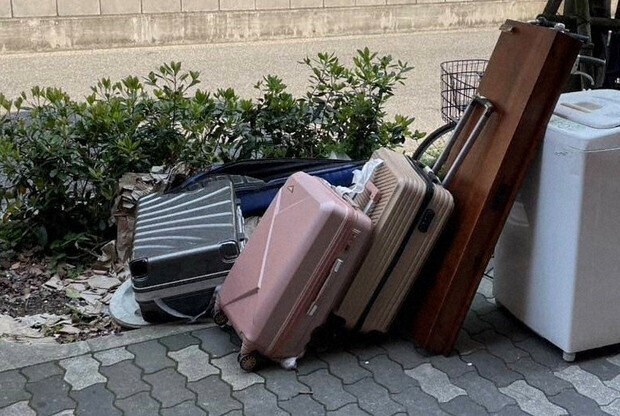
TOKYO — As a surge in inbound tourism brings economic benefits to Japan, local communities are increasingly grappling with an unexpected headache: abandoned suitcases. In response, a local government in Tokyo has introduced a strict ordinance to crack down on travelers leaving their luggage behind on public streets.

According to reports by the Nihon Keizai Shimbun (Nikkei), Tokyo’s Toshima Ward has enacted an ordinance that imposes a fine of up to 20,000 yen (approximately 167,000 KRW) for abandoning travel bags in public areas.

The ordinance is scheduled to take effect in April, with enforcement and actual penalty collections beginning in July. Toshima Ward, a densely populated area in northwestern Tokyo, encompasses Ikebukuro—a major commercial and transit hub bustling with shopping centers and office buildings. While the ward previously maintained regulations against public smoking and littering, it has now officially added suitcases to its prohibited list. Authorities plan to deploy dedicated inspection personnel to conduct regular patrols around the Ikebukuro and Otsuka station areas.

Nikkei noted that this is the first ordinance of its kind in Tokyo specifically targeting abandoned luggage, and a rare measure nationwide in Japan.

A Growing Burden for Airports and Police

The issue stems largely from travelers whose shopping sprees leave them with excess baggage. Many tourists reportedly purchase larger suitcases during their trips and casually discard their old or damaged bags on streets, train platforms, or at airports.

Toshima Ward reported recovering 290 abandoned suitcases within its jurisdiction last year, with the vast majority concentrated around Ikebukuro, an area densely packed with hotels and guesthouses.

The problem extends far beyond local streets. At Narita International Airport, the number of abandoned suitcases reached 1,201, a 1.5-fold increase over a three-year period. Kansai International Airport recovered 315 suitcases between April and August, with only 40 percent successfully returned to their owners. Meanwhile, Chubu Centrair International Airport sees roughly 50 suitcases left behind every month.

Tokyo Metropolitan Police handled 4,600 abandoned suitcases last year—nearly 1.8 times the figure recorded in 2022. Because luggage is bulky, police must secure significant storage space and conduct safety inspections to check for hazardous materials, placing a heavy logistical burden on law enforcement.

Under current procedures, police store lost luggage for three months, but roughly 70 percent of these items remain unclaimed. Unclaimed suitcases eventually become the property of the Tokyo Metropolitan Government and are auctioned off to recyclers. Due to the sheer volume of bags, the Tokyo Metropolitan Police Department has even established a dedicated storage facility at its lost-and-found center specifically for items recovered from airports.

Industry experts point out that because Japan offers an abundance of affordable, high-quality retail goods, many tourists upgrade their luggage before heading home rather than shipping or packing efficiently. Experts emphasize that solving the crisis requires public-private collaboration—such as setting up collection hubs operated by retailers where travelers can responsibly dispose of or recycle old bags, complete with a transparent processing fee system.

[Copyright (c) Global Economic Times. All Rights Reserved.]

  • #Cherry Garden
  • #HalalFood
  • #Halal
  • #Petlife
  • #Halalhorizone
  • #Hormuz Impasse
  • #Joseon
  • #globaleconomictimes
  • #micore
Pedro Espinola Special Correspondent

Popular articles

  • Gold Trade Without US Dollars: China's New Channel for Yuan Internationalization

  • China’s First AI-Generated Film Bombs at the Box Office, Failing to Recover Even a Fraction of Its Budget

  • Asian Semiconductor Hubs Shaken as Taiwan’s TAIEX Slumps 9% Amid AI Sell-Off

I like it
Share
  • Facebook
  • X
  • Kakaotalk
  • LINE
  • BAND
  • NAVER
  • https://globaleconomictimes.kr/article/1065552546159401 Copy URL copied.
Comments >

Comments 0

Weekly Hot Issue

  • Profitability Divergence Grips Korea’s Top Three Cosmetic ODM Giants Amid Global K-Beauty Boom
  • Tensions Flare in Israel Over Interim Military Authority Amid Ongoing Transition Crisis
  • Environmental Crisis Deepens in the Strait of Hormuz Following Tanker Incidents
  • Navigating Power and Succession: Uganda’s Political Landscape Under the Musevenis
  • Yemeni Houthi Movement Reports Missile and Drone Strikes on Saudi Energy and Military Sites
  • South Korea Invited to Tap into Bangladesh's $80 Billion Industrial Transformation

Most Viewed

1
South Korea and Ethiopia Sign Trilateral MOU to Introduce Liquid-Based Cytology (LBC) Technology for Cervical Cancer Diagnosis
2
US Army Conducts Rare Temporary Burial Drills to Prepare for Worst-Case Large-Scale War Scenarios
3
From Kim Whanki to Pokémon Cards... Seoul Auction Opens the Floodgates
4
Meeting Christmas Early!… Busan Dessert Sales Event "Daldal The Market" Held
5
World Citizens are Flying Directly to Busan... The Era of 4 Million Foreigners is Just Around the Corner
체리가든 스토리
nutri huevos
로타리
동포저널

Hot Issue

Collette Kress Steps In as Interim NVIDIA CEO Following Jensen Huang’s Departure

NVIDIA Chief Jensen Huang Steps Down After Three Decades at the Helm

Corporate Misconduct and Leadership Exits: A Retrospective on Tech and Retail Chief Executives

Fashion Runway Show 2026

Let’s recycle the old blankets in Jeju Island’s closet instead of incinerating them.

Global Economic Times
korocamia@naver.com
CEO : LEE YEON-SIL
Publisher : KO YONG-CHUL
Registration number : Seoul, A55681
Registration Date : 2024-10-24
Youth Protection Manager: KO YONG-CHUL
Singapore Headquarters
5A Woodlands Road #11-34 The Tennery. S'677728
Korean Branch
Phone : +82(0)10 4724 5264
#304, 6 Nonhyeon-ro 111-gil, Gangnam-gu, Seoul
Copyright © Global Economic Times All Rights Reserved
  • News K
  • 반달곰 프로젝트
  • 광고문의
Search
Category
  • All articles
  • Synthesis
  • World
  • Business
  • Industry
  • ICT
  • Distribution Economy
  • Well+Being 
    • 전체
    • Pet Life
    • Halal Horizon
  • Travel
  • Eco-News
  • Education
  • Korean Wave News
  • Opinion
  • Arts&Culture
  • Sports
  • People & Life 
    • 전체
    • International Student Report
    • With Ambassador
  • Column 
    • 전체
    • Cho Kijo Column
    • Cherry Garden Story
    • Ko Yong-chul Column
    • Kim Bong-seon's Photo Column
    • Kim Seul-Ong Column
    • Lee Yeon-sil Column
  • Photo News
  • New Book Guide
  • Overseas Koreans
  • Multicultural News