• 2026.04.21 (Tue)
  • All articles
  • LOGIN
  • JOIN
Global Economic Times
fashionrunwayshow2026
  • Synthesis
  • World
  • Business
  • Industry
  • ICT
  • Distribution Economy
  • Well+Being
  • Travel
  • Eco-News
  • Education
  • Korean Wave News
  • Opinion
  • Arts&Culture
  • Sports
  • People & Life
    • International Student Report
    • With Ambassador
  • Column
    • Cho Kijo Column
    • Cherry Garden Story
    • Ko Yong-chul Column
    • Kim Seul-Ong Column
    • Lee Yeon-sil Column
  • Photo News
  • New Book Guide
MENU
 
Home > Industry

Jajangmyeon Prices Soar Over the Past Decade, Leading 'Noodle-flation'

Desk / Updated : 2025-01-31 02:55:43
  • -
  • +
  • Print

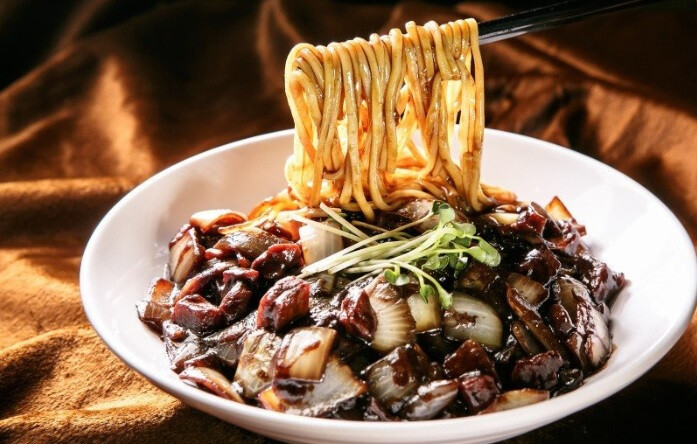
Among popular dining-out options in South Korea, the price of jajangmyeon (black bean noodles) has seen the most significant increase over the past 10 years.

According to the Korea Consumer Agency's price information platform, "Chamgageok," the average price of seven popular menu items in Seoul rose by 40.2% in December 2023 compared to December 2014.

During this period, the price of jajangmyeon, a quintessential affordable dish, jumped from 4,500 won to 7,423 won, marking a 65% surge – the highest among the listed menu items.

Jajangmyeon prices surpassed the 5,000 won mark in 2019 and even exceeded 7,000 won in 2023, just four years later.

Other notable price increases include:

Cold noodles (naengmyeon): 8,000 won to 12,000 won (50% increase)
Kimchi stew with rice: 5,727 won to 8,269 won (44.4% increase)
Knife-cut noodle soup (kalguksu): 6,500 won to 9,385 won (44.4% increase)
In contrast, the price of gimbap (seaweed rice rolls) saw the smallest increase, rising from 3,200 won to 3,500 won (9.4%).

Factors Behind the Jajangmyeon Price Hike

The disproportionate rise in jajangmyeon prices compared to other dishes is primarily attributed to the soaring costs of its key ingredients.

According to the National Statistical Office's National Statistics Portal, the consumer price index for green onions skyrocketed by 110% during the same period. Other agricultural products like cucumbers (100%), zucchini (70%), and onions (60%) also experienced significant price increases.

Processed food ingredients were not exempt from this trend. Salt prices rose by 80%, while sugar, cooking oil, soy sauce, and flour saw increases of around 50%, 40%, and 30%, respectively. Pork, the sole meat ingredient in jajangmyeon, also increased by 40%, further adding to the cost burden.

Continued Price Rise and Future Outlook

Jajangmyeon prices continued to climb in the past year, with a 5% increase from January to December 2023 alone. If this trend persists, the average price of jajangmyeon in Seoul's local Chinese restaurants is projected to reach the 8,000 won range as early as next year.

Lee Dong-hoon, a senior researcher at Korea Price Information, explained, "Jajangmyeon, with its diverse range of ingredients from agricultural products to processed foods and livestock, is particularly vulnerable to fluctuations in commodity prices. With the general upward trend in ingredient prices, the cost of jajangmyeon is likely to be affected."

[Copyright (c) Global Economic Times. All Rights Reserved.]

Desk
Desk

Popular articles

  • Samsung Completes Transition to 236-Layer 8th Gen V-NAND in Xi’an; 9th Gen Mass Production Slated for Late 2026

  • France Invites South Korea to June G7 Summit; Seoul Evaluating Attendance

  • S. Korea to Launch Government-Backed 'K-Brand' Certification to Combat Global Counterfeiting

I like it
Share
  • Facebook
  • X
  • Kakaotalk
  • LINE
  • BAND
  • NAVER
  • https://globaleconomictimes.kr/article/1065549220409072 Copy URL copied.
Comments >

Comments 0

Weekly Hot Issue

  • Theori Supplies ‘Xint,’ an AI-Powered Hacker Solution, to Samsung Electronics
  • Inzent Partners with Canada’s Solace to Accelerate Expansion in the Financial IT Market
  • FORCS to Unveil 'eformsign AI Assistant' at WIS 2026: A Revolution in AI-Powered Electronic Documents
  • [Interview] Chairman David Cha of ‘Ethiopia Bet’: "Building a House (Bet) of Self-Reliance Beyond Simple Relief"
  • Taiwanese Tourism Industry Experiences the Charm of Chungnam
  • A University Professor's Lament

Most Viewed

1
From the Alps to Seoul: Life in the Heart of Europe
2
BYD Hits 10,000-Unit Milestone in South Korea Within One Year, Eyes Exclusive "10,000 Club" Entry
3
$2 Million Per Ship: Iran’s "Hormuz Toll" Emerges as Chokepoint in Peace Talks
4
BOK Holds Rate Steady for Seventh Consecutive Meeting, Signaling End of Easing Cycle
5
Republican Party Faces "Total Crisis" as War and Inflation Cloud Midterm Outlook
광고문의
임시1
임시3
임시2

Hot Issue

Generative AI Use Triples Among Seoul Citizens, but Digital Divide Persists for Seniors

MAFRA Unveils Success in Integrated Rural Care: Synergizing Social Farming and Medical Services

Gov't Launches 'One-Team' Initiative to Transform Regional Airports into Tourism Hubs

Inzent Partners with Canada’s Solace to Accelerate Expansion in the Financial IT Market

Fashion Runway Show 2026

Global Economic Times
korocamia@naver.com
CEO : LEE YEON-SIL
Publisher : KO YONG-CHUL
Registration number : Seoul, A55681
Registration Date : 2024-10-24
Youth Protection Manager: KO YONG-CHUL
Singapore Headquarters
5A Woodlands Road #11-34 The Tennery. S'677728
Korean Branch
Phone : +82(0)10 4724 5264
#304, 6 Nonhyeon-ro 111-gil, Gangnam-gu, Seoul
Copyright © Global Economic Times All Rights Reserved
  • 에이펙2025
  • APEC2025가이드북TV
  • 반달곰 프로젝트
Search
Category
  • All articles
  • Synthesis
  • World
  • Business
  • Industry
  • ICT
  • Distribution Economy
  • Well+Being
  • Travel
  • Eco-News
  • Education
  • Korean Wave News
  • Opinion
  • Arts&Culture
  • Sports
  • People & Life 
    • 전체
    • International Student Report
    • With Ambassador
  • Column 
    • 전체
    • Cho Kijo Column
    • Cherry Garden Story
    • Ko Yong-chul Column
    • Kim Seul-Ong Column
    • Lee Yeon-sil Column
  • Photo News
  • New Book Guide
  • Multicultural News
  • Jobs & Workers