![[등록] 2026-09-01 15:48:31](/support/_updata/banner2/tl181982910_6749.png)


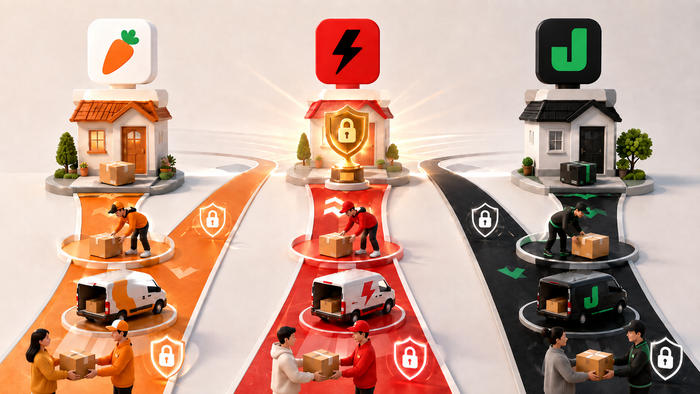
SEOUL — South Korea’s thriving re-commerce market is entering a new phase of hyper-competition as platforms scramble to streamline the final, most friction-heavy stage of second-hand transactions: the last mile. On August 12, 2026, major second-hand platform Joonggonara announced the upcoming beta release of its new "Doorstep Courier" service, marking a strategic pivot toward full end-to-end logistics automation and integrated escrow security.
Following an initial beta phase scheduled for mid-August, Joonggonara plans to launch the service officially in September alongside aggressive shipping fee promotions. The initiative brings Joonggonara into direct competition with rivals Karrot (Daangn) and Bunjang, both of which have rapidly expanded their nationwide non-face-to-face logistics networks.
Seamless End-to-End Logistics and Escrow Security
Joonggonara's Doorstep Courier service operates seamlessly within the platform’s escrow payment system. Once a buyer completes a transaction using secure payment, a partner courier company—widely expected to be Lotte Logistics, Joonggonara’s long-standing courier partner—dispatches a driver directly to the seller’s registered address to collect the packaged item and deliver it to the buyer.
The service aims to lower transaction friction by catering to the growing consumer demand for remote, non-face-to-face trading. In traditional C2C courier transactions, sellers were burdened with manually packaging items and physically bringing them to convenience stores or post office drop-off locations. Doorstep Courier completely removes this inconvenience, enabling sellers to dispatch items directly from their homes with minimal effort.
"Doorstep Courier builds upon and enhances our existing pickup offerings. Our primary focus is to elevate user convenience and maximize tangible transaction benefits within an integrated, highly secure payment ecosystem."
— Joonggonara Official Representative
A Three-Way Battle for Re-Commerce Dominance
Joonggonara’s strategic rollout is a direct countermeasure against Karrot and Bunjang, both of which have been aggressively capturing market share in nationwide non-face-to-face commerce.
Karrot, traditionally celebrated for its neighborhood-centric, face-to-face direct trade model, made a major splash in September 2025 by introducing its "Direct Purchase" service in partnership with CJ Logistics. Under Direct Purchase, buyers can purchase items instantly without engaging in seller chat messages. The seller packages the goods, and a courier collects the item directly from the seller's doorstep for delivery anywhere across the nation. Karrot expanded this service nationwide in March 2026, effectively morphing from a hyper-local neighborhood app into a nationwide re-commerce powerhouse.
The nationwide expansion triggered explosive operational growth. According to Karrot data, transaction volumes maintained robust double-digit monthly growth rates throughout the spring and summer of 2026. Month-over-month growth jumped by 78% between April 3 and May 3, followed by steady consecutive monthly increases of 22% (May 4 – June 3), 20% (June 4 – July 4), and 38% (July 5 – August 4). This sustained surge reflects a profound structural shift among Korean consumers toward convenient, remote secondhand shopping.
Meanwhile, Bunjang has established a formidable presence in the non-face-to-face segment. In 2024, Bunjang made a decisive move by converting all platform transactions to its mandatory escrow-based "Bunjang Pay," while seamlessly integrating courier pickup options into its core checkout flow. While Bunjang does not market this feature under a separate sub-brand like Karrot or Joonggonara, its natively embedded courier pickup and escrow payment infrastructure provides a friction-free experience for its user base.
Lowering Friction and Expanding the User Base
Industry observers believe that the widespread adoption of doorstep pickup services paired with escrow payments by all three major platforms will significantly lower the barrier to entry for second-hand trading. Historically, a substantial portion of potential users avoided re-commerce due to discomfort with face-to-face meetings, complex shipping procedures, or the fear of online financial scams.
Escrow payment systems protect buyers from fraud by holding funds in trust until the item is received and inspected, while automated doorstep logistics remove physical inconvenience for sellers.
"In non-face-to-face transactions, reducing seller friction during fulfillment is the ultimate competitive edge. How easily and safely a platform bridges the entire journey—from discovery and payment to home pickup and final delivery—will define market leadership."
— Industry Logistics Analyst
As the last-mile logistics war intensifies, South Korea's re-commerce ecosystem is evolving rapidly from simple local classifieds into sophisticated, nationwide e-commerce platforms.
[Copyright (c) Global Economic Times. All Rights Reserved.]