South Korea’s real estate landscape is undergoing a notable demographic shift. According to the "2025 Housing Ownership Statistics" released by the National Statistics Agency, the number of individuals owning two or more homes reached 2.42 million as of November 1 of last year, marking an increase of approximately 44,000 from the previous year.
This growth was primarily driven by older generations. Adults in their 60s and 70s actively expanded their real estate portfolios, with those in their 70s seeing the largest surge (an increase of about 32,000 to 326,000) followed by those in their 60s (up by roughly 26,000 to 684,000). Consequently, individuals aged 60 and older now account for nearly half (46.1%) of all multiple homeowners nationwide. Conversely, the proportion of younger demographics—specifically those in their 30s and 40s—decreased during the same period.
Geographic Concentration: Gangnam Trio and the Inflow of Provincial Wealth
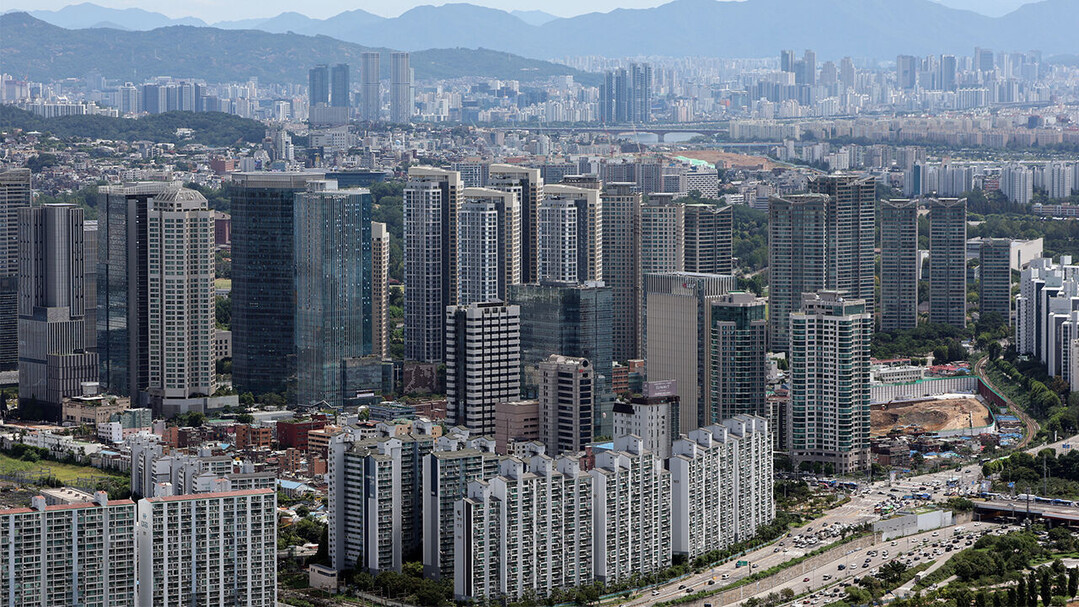
Geographically, multiple homeownership remains heavily concentrated in capital-area hotspots. Among multiple homeowners residing in Seoul, roughly one in five lives in the affluent "Gangnam 3-gu" districts (Gangnam, Seocho, and Songpa). For individuals owning five or more homes, this concentration rises sharply to one in three. Songpa-gu recorded the highest number of multiple homeowners in the capital, followed by Gangnam-gu and Seocho-gu.
However, a critical trend highlighted in the data is that 93.4% of the net increase in multiple homeowners came from individuals residing outside of Seoul. Non-Seoul residents accounted for an estimated 40,000 of the 44,000 newly minted multiple owners.
Furthermore, external investment heavily penetrated the Seoul housing market. Properties in Seoul owned by out-of-towners increased by 7,298 units last year—accounting for 42.3% of the total net increase in privately owned housing within the capital. In districts like Yongsan and Mapo, more than one in five privately owned homes now belongs to non-Seoul residents. Meanwhile, Seoul's local homeownership rate sits at 48.3%, the lowest in the nation, meaning more than half of Seoul households do not own a home.
Shifting Market Drivers: From Investment to Real Demand
Industry experts point out that the influx of provincial capital and older investors reflects how investment demand fueled last year's rising property markets. Wealthy individuals from outside the capital targeted high-end properties in Seoul, drawn by the market's reputation as a secure asset offering both stable returns and capital gains.
Experts note that while government regulations and transaction permits successfully curbed certain speculative investments, they also generated unintended ripple effects. Stricter residency requirements reduced jeonse (lump-sum rental) supply, intensifying rental market burdens. Unable to cope with soaring rental costs, many tenants shifted toward purchasing mid-to-low-priced homes, which subsequently propelled price increases in areas like "No-Do-Gang" (Nowon, Dobong, Gangbuk) and "Geum-Gwan-Gu" (Geumcheon, Gwanak, Guro).
Ultimately, while the government's "residency-first" housing policies successfully redirected demand away from luxury speculative investments toward regional real-use purchases, persistent rental market instability continues to pose a formidable policy challenge as authorities search for sustainable supply-side solutions.
[Copyright (c) Global Economic Times. All Rights Reserved.]