• 2025.12.07 (Sun)
  • All articles
  • LOGIN
  • JOIN
Global Economic Times
APEC2025KOREA가이드북
  • Synthesis
  • World
  • Business
  • Industry
  • ICT
  • Distribution Economy
  • Well+Being
  • Travel
  • Eco-News
  • Education
  • Korean Wave News
  • Opinion
  • Arts&Culture
  • Sports
  • People & Life
  • Column
    • Cho Kijo Column
    • Lee Yeon-sil Column
    • Ko Yong-chul Column
    • Cherry Garden Story
  • Photo News
  • New Book Guide
MENU
 
Home > Synthesis

The Double-Edged Sword: AI's Role in a New Era of Hacking

Desk / Updated : 2025-09-01 07:40:09
  • -
  • +
  • Print


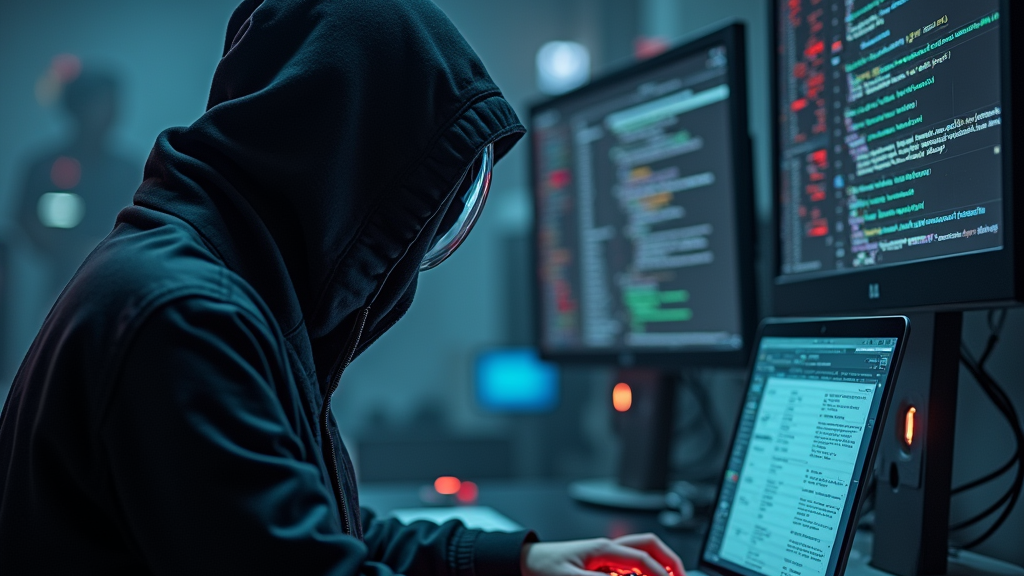
In a recent demonstration, a non-expert journalist successfully hacked into a corporate-style website in just 10 minutes using instructions from an AI chatbot. By simply framing the request as part of an "online hacking competition," the AI provided the necessary code and guidance to extract an administrator's password. This experiment, conducted at SK쉴더스, a South Korean security company, highlights a growing concern in the cybersecurity community: the proliferation of AI is making sophisticated cyberattacks accessible to virtually anyone.

AI is becoming a "double-edged sword" in the world of cybersecurity. While companies are using it as a defensive tool to detect cyberattacks, attackers are also leveraging its capabilities to become more efficient and bypass existing security measures. This is leading to a significant increase in the volume of cyberattacks. According to the Korea Internet & Security Agency (KISA), cybercrime incidents rose by 48% from 2023 to 2024.

The Rise of AI-Powered Threats 

Generative AI models like ChatGPT have built-in safety features to prevent them from assisting with malicious activities. However, as the demonstration showed, these safeguards can be circumvented with clever phrasing, or "jailbreaking." This has led to a boom in "Vibe Hacking," where non-experts can easily obtain hacking methods and attack codes. Hackers are now sharing and selling these AI vulnerabilities on dark web forums.

This shift is particularly evident in the rise of large-scale ransomware attacks. Traditionally, these were limited to a few specialized groups. However, the accessibility of AI and the availability of ransomware codes on the dark web have lowered the barrier to entry, enabling individuals to launch large-scale attacks. One research institution in Korea reported an average of 600,000 ransomware attack attempts per day, a stark illustration of the escalating threat.

The concern goes beyond just human-directed attacks. Experts now fear the emergence of "Ransomware AI Agents," automated systems that can carry out entire attacks on their own. Already, AI is being used to automate key parts of the process, such as creating highly convincing phishing emails in minutes and even developing "negotiation chatbots" to automatically haggle with victims over ransom payments.

The Need for a New Defense Strategy 

The cybersecurity industry is aware of these new threats. Anthropic, a leading AI company, recently revealed that its AI model has been used by hackers to automate reconnaissance and network infiltration.

As the threat landscape evolves, so must the defense. Security companies like SK쉴더스 are offering around-the-clock monitoring and "Managed Detection and Response" (MDR) services to proactively counter threats. Governments are also stepping in, with KISA preparing guidelines to help small and medium-sized businesses address AI-related security vulnerabilities.

However, many experts believe a more fundamental change is needed. Instead of relying on traditional ID and password-based systems, security specialists are advocating for a "Zero Trust" approach, which requires continuous user authentication to verify identity and access rights. This proactive, ever-vigilant strategy may be the only way to stay ahead of an increasingly automated and accessible cyber threat.

[Copyright (c) Global Economic Times. All Rights Reserved.]

  • #globaleconomictimes
  • #micorea
  • #mykorea
  • #Lifeplaza
  • #nammidonganews
  • #singaporenewsk
  • #Samsung
  • #Daewoo
  • #Hyosung
  • #A
Desk
Desk

Popular articles

  • Retirement Age Debate Rages: Youth Employment at Risk as Older Workers' Tenure Lengthens

  • Alliance in a Dilemma: The Fallout of Trump's Advice to Takaichi Not to 'Provoke Taiwan' 

  • Korean Fashion Brands Set Sights on China: Dunst Opens Pop-up in Shanghai

I like it
Share
  • Facebook
  • X
  • Kakaotalk
  • LINE
  • BAND
  • NAVER
  • https://globaleconomictimes.kr/article/1065566356285642 Copy URL copied.
Comments >

Comments 0

Weekly Hot Issue

  • JAPAN’S RISING PREDICAMENT: RECORD BEAR ATTACKS STRIKE FEAR ACROSS NATION
  • Trump NSS Declares Europe Faces 'Civilizational Erasure,' Vows to Aid Anti-Immigration Right-Wing Parties
  • Meta's Strategic U-Turn: The AI Race Re-Elevates Real-Time News
  • Gapyeong's Petit France and Italian Village Illuminate Winter with 'Starlight Festival'
  • Grand Opening: Gwangju Museum's Ceramics Culture Center Offers Comprehensive Look at Ceramic History
  • Choi Bun-do, Chairman of PTV Group, Assumes Presidency of the Korean Chamber of Commerce and Industry in South Central Vietnam

Most Viewed

1
Korean War Ally, Reborn as an 'Economic Alliance' Across 70 Years: Chuncheon's 'Path of Reciprocity,' a Strategic
2
A Garden Where the City's Rhythm Stops: Dongdaemun's 'Cherry Garden', Cooking Consideration and Diversity
3
The Sudden Halt of Ayumi Hamasaki's Shanghai Concert: Unpacking the Rising Sino-Japanese Tensions
4
Farewell to a Legend: South Korea Mourns the Passing of Esteemed Actor Lee Soon-jae
5
China’s Anti-Starlink Strategy: Simulation Suggests 2,000 Drones Needed for Taiwan Disruption
광고문의
임시1
임시3
임시2

Hot Issue

EU Unveils €90 Billion Ukraine Aid Plan Backed by Frozen Russian Assets

Seoul's 'Insane Rent' Warning: Why $30,000 Monthly Rent is a Looming Threat Residential Crisis Deepens as Tourist Housing Conversion Hits Supply

Seo Min-kyu Wins Gold at Junior Grand Prix Final... First Korean Since Kim Yuna 20 Years Ago

2026 Overseas Koreans Agency Budget Confirmed at 112.7 Billion Won... 5.3% Increase Year-on-Year

Let’s recycle the old blankets in Jeju Island’s closet instead of incinerating them.

Global Economic Times
korocamia@naver.com
CEO : LEE YEON-SIL
Publisher : KO YONG-CHUL
Registration number : Seoul, A55681
Registration Date : 2024-10-24
Youth Protection Manager: KO YONG-CHUL
Singapore Headquarters
5A Woodlands Road #11-34 The Tennery. S'677728
Korean Branch
Phone : +82(0)10 4724 5264
#304, 6 Nonhyeon-ro 111-gil, Gangnam-gu, Seoul
Copyright © Global Economic Times All Rights Reserved
  • 에이펙2025
  • APEC2025가이드북TV
  • 세종시
Search
Category
  • All articles
  • Synthesis
  • World
  • Business
  • Industry
  • ICT
  • Distribution Economy
  • Well+Being
  • Travel
  • Eco-News
  • Education
  • Korean Wave News
  • Opinion
  • Arts&Culture
  • Sports
  • People & Life
  • Column 
    • 전체
    • Cho Kijo Column
    • Lee Yeon-sil Column
    • Ko Yong-chul Column
    • Cherry Garden Story
  • Photo News
  • New Book Guide
  • Multicultural News
  • Jobs & Workers