SHENZHEN, China — Frosty relations between Beijing and Tokyo were on full display at the Asia-Pacific Economic Cooperation (APEC) summit in Shenzhen on Wednesday, as Chinese officials afforded Japanese Prime Minister Sanae Takaichi a noticeably muted reception compared to other visiting world leaders.
According to Japanese broadcasters FNN and TV Asahi, Takaichi’s first visit to China since taking office was marked by a stark contrast in diplomatic protocol. Upon arriving at Shenzhen Bao'an International Airport on Wednesday afternoon following a trip to the Philippines, the Japanese leader was met solely by a small honor guard and a Foreign Ministry protocol official, devoid of the music, floral arrangements, or welcoming crowds provided for other leaders, including South Korean President Lee Jae-myung and the prime minister of Thailand.
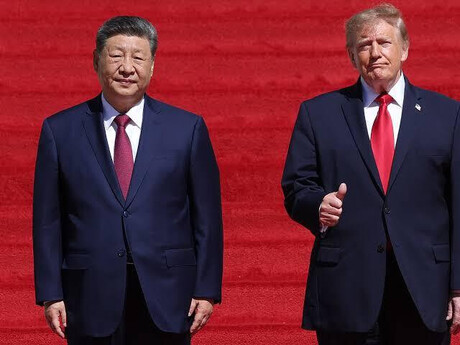
The diplomatic disparity was particularly pronounced alongside the arrivals of U.S. President Donald Trump and Russian President Vladimir Putin. President Xi Jinping personally greeted Trump on the tarmac with an embrace, accompanied by a military flyover and a large welcoming delegation, while Putin was received by Cai Qi, one of Xi’s top-ranking aides.
Tensions between Beijing and Tokyo have remained elevated since last year, when Takaichi suggested Japan could potentially intervene in the event of a contingency involving Taiwan—a remark that drew sharp rebuke from China.
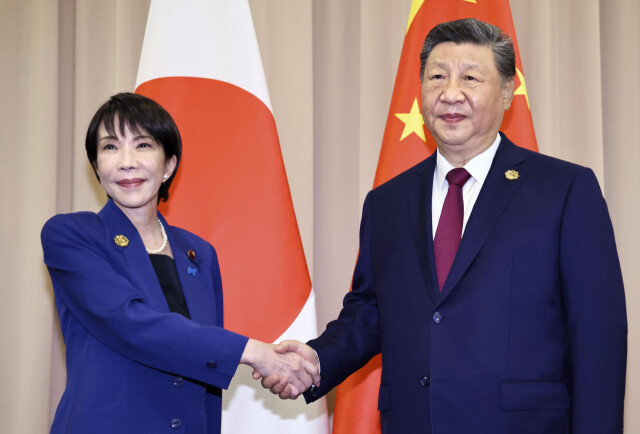
During the APEC welcoming banquet on Wednesday evening, Takaichi and Xi crossed paths for the first time since those remarks. While Takaichi smiled and initiated brief remarks during their ceremonial handshake, Xi maintained a stoic, unsmiling demeanor. In the subsequent leaders' group photograph, Trump and Putin were positioned immediately alongside Xi and his spouse, while Takaichi stood in the back row.
Observers also noted Beijing's choice of entrance music for the Japanese delegation: Kyu Sakamoto’s 1961 classic "Ue o Muite Aruko." While celebrated globally as the first Japanese song to top the U.S. Billboard Hot 100, its melancholic lyrics about walking alone through sorrow led some commentators to speculate that the selection was a subtle nod to Tokyo's current diplomatic isolation.
Inside Tokyo, reactions were mixed. FNN reported that while a senior Foreign Ministry official privately described the disparity in airport protocol as "rude," other government insiders viewed the reception as a pragmatic reflection of the current bilateral climate, expressing relief that a direct, albeit brief, greeting between the two leaders had occurred.
Diplomatic analysts suggest Beijing is leveraging the APEC gathering to showcase a trilateral dynamic with Washington and Moscow while deliberately keeping Tokyo at arm's length—a tactic reminiscent of the 2014 APEC summit, where Xi similarly offered a stone-faced greeting to then-Prime Minister Shinzo Abe amid territorial and historical disputes. Nevertheless, Japanese media reports indicate that Tokyo intends to continue seeking avenues for dialogue with Beijing following Thursday's scheduled U.S.-China-Russia talks.
[Copyright (c) Global Economic Times. All Rights Reserved.]